Toy Wash Station: A Toddler Independent Play Activity That Buys You 20 Minutes

By Katie · Mom of 2 under 3. Founder, Screen Free Toddlers.
· Updated · 9 min read · @screenfree_toddlers
Set up a toy wash station in one minute and watch your toddler scrub. A screen-free independent play activity using a bowl, a sponge, and a towel.
Time: 15+ minutes | Age: 18 months-4 years | Setup: 1 minute | Mess Level: Medium
It was around 4:30 and my toddler had dumped out the whole bin of farm animals and Paw Patrol figurines we picked up at Goodwill the week before and lost interest in all of them inside of about ninety seconds. I was trying to wipe down the counters and getting nowhere, because she kept tugging at my leg, reaching for the sponge in my hand. She did not want a toy. She wanted my sponge.
So I gave her one. One bowl of water on a towel, the figurines dumped into a second bin, and a single instruction: wash the toys. That is the toy wash station, one of the easiest toddler independent play activities I have tested, and it works because of something simple. Toddlers want to do whatever you are doing, and scrubbing things is endlessly satisfying to small hands.
Here is how to set it up in about a minute, why it holds a toddler’s attention, and what to do when it turns into a puddle.
Why the Toy Wash Station Works for Toddlers
Toddlers are wired to copy you. Imitation is one of the main ways they learn during these years, which is why a real sponge beats a pretend one every time. According to the CDC’s developmental milestones, copying adults and chores is exactly the kind of behavior you start seeing around age two. When you hand a toddler a sponge and a job that looks like your job, you are tapping straight into that drive.
There is also a lot of fine motor work hiding in this activity. Gripping a wet sponge, squeezing the water out, pinching small toys, and wiping in circles all build the hand strength and coordination that toddlers later use for crayons and zippers. The water adds resistance, which makes those little muscles work a bit harder than they would on dry play. On top of that, the activity is full of cause and effect: dunk the sponge, water comes out; scrub the toy, the dirt comes off. That feedback loop is part of why kids stay locked in.
The payoff you will actually notice is concentration. You will catch your toddler scrubbing one toy far longer than they would ever stare at a single thing on a screen, with that quiet, focused look that means their brain is busy.
What You Need
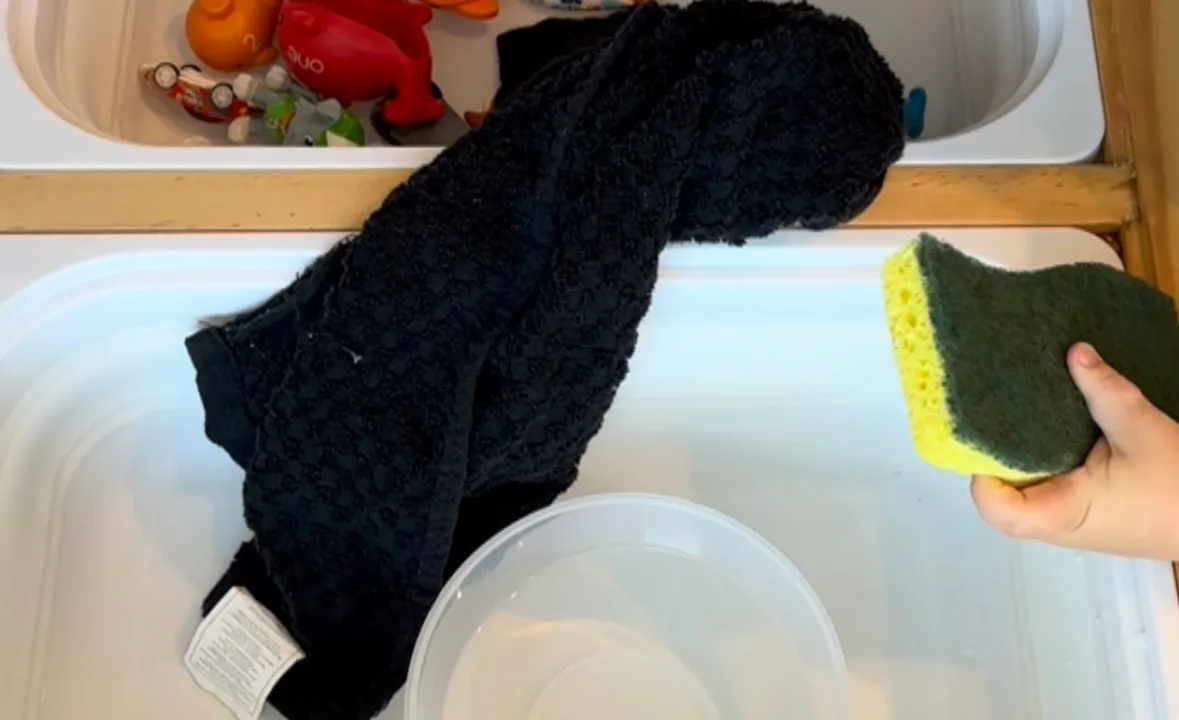
- 1 bowl or small bin for the water. A mixing bowl or a small tub works. Anything too big becomes a tipping hazard once they lean on it.
- 1 second bin for the dirty toys. This gives the activity a clear start and finish, which helps toddlers stick with it.
- 1 sponge. A regular kitchen sponge is perfect. A cloth or a soft brush works too if you want less squeezing and more wiping.
- 2 towels. One goes under the bowl to soak up splashes, the other becomes the drying spot for clean toys.
- A handful of hard plastic toys. Plastic animals, blocks, toy cars, and bath toys are ideal. Skip anything wood, fabric, or electronic.
Total cost: nothing you do not already own.
How to Set Up the Toy Wash Station
- Spread one towel on the floor or counter to catch the drips.
- Add a couple of inches of warm water to one bowl and drop the sponge in.
- Put a handful of hard plastic toys in a second bin set right next to the bowl.
- Lay the second towel beside the bowl as the spot for clean toys to dry.
- Wash one toy yourself to show them, then hand over the sponge and step back.
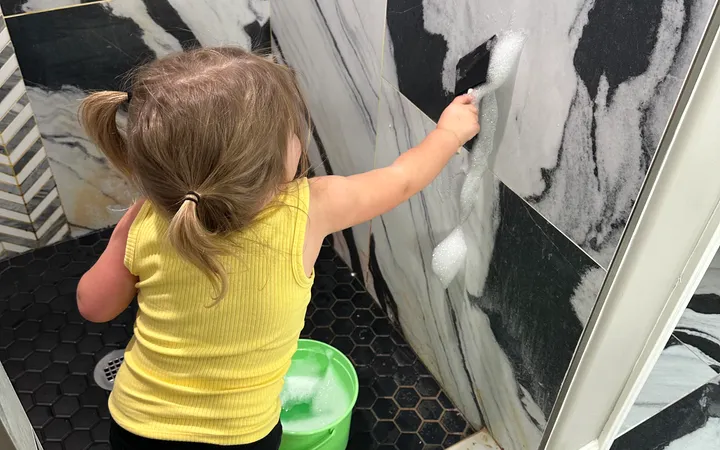
You can change the flavor of this a dozen ways. A drop of dish soap turns it into a bubble version that lasts longer. Swap the sponge for a soft toothbrush and small toys become a scrubbing project with more detail work. In summer, the whole thing moves outside onto the patio where the mess does not matter at all. Or into the shower, which is how the shower wash works.
If your toddler loses steam fast, give the activity a reset instead of ending it. Dump the clean toys back in the dirty bin and tell them the toys got dirty again, or add a second “rinse” bowl so each toy moves through two stations. A fresh job is usually enough to pull them back in for another stretch. If the water itself is the part they love, a water cups sensory bin scratches the same itch with even less to clean up.
Love this one? There are 75 more.
The 75 Toddler Activities Guide is a flip-through bank of screen-free activities, all using things you already have at home. Pick one, set it up, buy yourself 15–20 minutes.
See the 75 Activities Guide →Age Tweaks
For 2-Year-Olds
At two, your toddler is deep in the imitation phase and loves any job that looks like yours. Do not expect actual clean toys. Expect dunking, splashing, and a lot of moving the sponge from one hand to the other. Keep the water shallow and the toy pile small, around five or six items, so the bin does not feel overwhelming. This is also the age where younger toddlers, even down around 18 months, can join in, though they will dab more than scrub.
For 3-Year-Olds
Three-year-olds start to take the job seriously. They will scrub each toy, inspect it, and often line the clean ones up on the drying towel. This is a good age to add the two-bowl version, one to wash and one to rinse, because they can follow a two-step process now. You can also narrate it as a real task, like washing the toys before bath time, and they will buy in completely.
For 4-Year-Olds
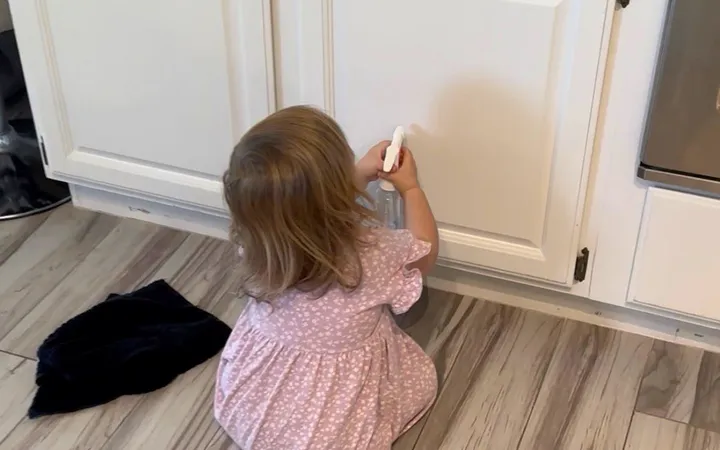
By four, you can hand over the whole operation. Let them carry the bowl, fill it at the sink with your supervision, choose which toys need washing, and dry each one. Adding a small spray bottle (the whole point of spray bottle cabinet cleaning) or a second tool turns it into a longer, more involved project. At this age the activity can stretch well past 20 minutes if you give them a reason to keep going, like a row of toys that all need to be clean and dry.
What Happened When We Did It
The first time, I set it up at the back door at 4:30 because that is our hardest hour. I filled a cereal bowl, dropped in a sponge, dumped in the same farm animals and Paw Patrol figurines, and washed one pig while she watched. Then I handed her the sponge. She did not look up again for a while.
It was not spotless. Water went over the edge of the towel within the first few minutes, and at one point she decided the cow needed to take a swim and the whole bowl nearly went with it. I mopped it with the drying towel and kept going. She washed the same three over and over, completely absorbed, while I unloaded the dishwasher and drank coffee that was still warm. That is the honest version. Twenty minutes, one small puddle, and a kitchen I actually got to finish.
No energy to plan tomorrow's activity?
The 75 Toddler Activities Guide does the thinking for you. 75 ideas sorted by setup time and materials. Less mental load for you, a happy and engaged toddler for them.
Get the 75 Activities Guide →Common Issues and Troubleshooting
My toddler dumped the whole bowl of water on the floor. This happens, especially the first time. Use less water next time, just an inch or two, and set the bowl on a towel against a wall or cabinet so it has fewer directions to tip. A heavier bowl with a wide base also helps. A small spill is part of the deal, not a sign it failed.
My toddler just wants to splash, not wash. Splashing is still water play, and for a younger toddler it is the whole point. If you want more washing and less splashing, switch to a damp sponge with no standing water in the bowl, or use a cloth they wipe the toys with. As they get older, the scrubbing instinct shows up on its own.
My toddler finished in three minutes. Reset it before they walk away. Dump the clean toys back in the dirty bin, or add a rinse bowl so each toy goes through two steps. Telling them a toy “still has a spot” can also send them back in for another round.
My toddler put the sponge in their mouth. Use a fresh sponge with no soap, and supervise closely. If your toddler still mouths everything, swap the sponge for a washcloth, which is safer if it ends up in their mouth, and skip the soap entirely.
Frequently Asked Questions
What age is the toy wash station good for?
It works well from about 18 months to 4 years. Younger toddlers will splash and dab more than scrub, and that is fine. Older toddlers will actually clean each toy and line them up to dry.
How long will my toddler play with it?
Most toddlers stick with it for 15 minutes or more, and some go much longer. The repetitive scrubbing motion is calming, so it tends to hold attention better than a brand new toy does.
Won’t water get everywhere?
Some water will end up off the towel. That is normal and easy to mop up. Use only a few inches of water in the bowl and put a second towel underneath to catch the splashes, and the cleanup stays small.
What toys are safe to wash?
Stick to hard plastic toys, bath toys, plastic animals, blocks, and toy cars. Skip anything wooden, electronic, battery powered, or made of fabric, since water can warp or ruin them.
Is the toy wash station good for independent play?
Yes. Because it copies a real chore and gives the toddler a clear job, it is one of the better setups for buying yourself a stretch of hands-free time nearby.
Mom to Mom
Some days you will set this up and get a glorious 25 minutes. Other days the bowl goes over in the first two and you are wiping the floor while your toddler wanders off. Both count. The goal was never a perfect Pinterest setup or a kid who plays quietly for an hour. It was one real activity, made from a bowl and a sponge you already have, that gives your toddler something good to do and gives you a few minutes to breathe. Small wins are still wins, and on the hard days they are the only kind that matter. More independent play activities are here.
If the toy wash station bought you even ten minutes, you will want a stack more like it. The Library of 75 Toddler Activities is the same flavor of low-prep, real-life-tested ideas, organized by what your toddler needs that day (focus, calm, energy out, fine motor). All using stuff you already have in the house.
Want tonight's dinner hour back?
Drop your email. I'll send you TONIGHT, a 3-step reset plan plus 4 setup-free activities for the meltdown hour.
By signing up, you agree to receive the guide and emails from Katie. Unsubscribe anytime.